Some places have a rather curious way of following us home. Long after I have left, I find myself returning to them in thought, often without quite knowing why. Over time, I found myself travelling for architecture almost as much as for the destinations themselves. A beautifully restored hotel, a gallery I had been longing to see, a centuries old monastery, or an interior that had captured my imagination long before I finally stood inside it. I would return home with a notebook full of observations and, almost invariably, far too many photographs.
Quite by accident, it was those photographs that revealed something I had failed to notice whilst I was taking them.
The architecture was wonderfully varied: different countries, different architects, different centuries. Yet my attention had settled upon something rather different. I seemed far more drawn to the quieter, less obvious charms. Light lingering just a little longer than expected. A room with a stillness that made you instinctively slow down. The quiet confidence of beautifully considered proportions. I found that rather curious.
Until then, I had assumed I was photographing architecture. Looking back now, I suspect I was searching for something rather more elusive.
Character.
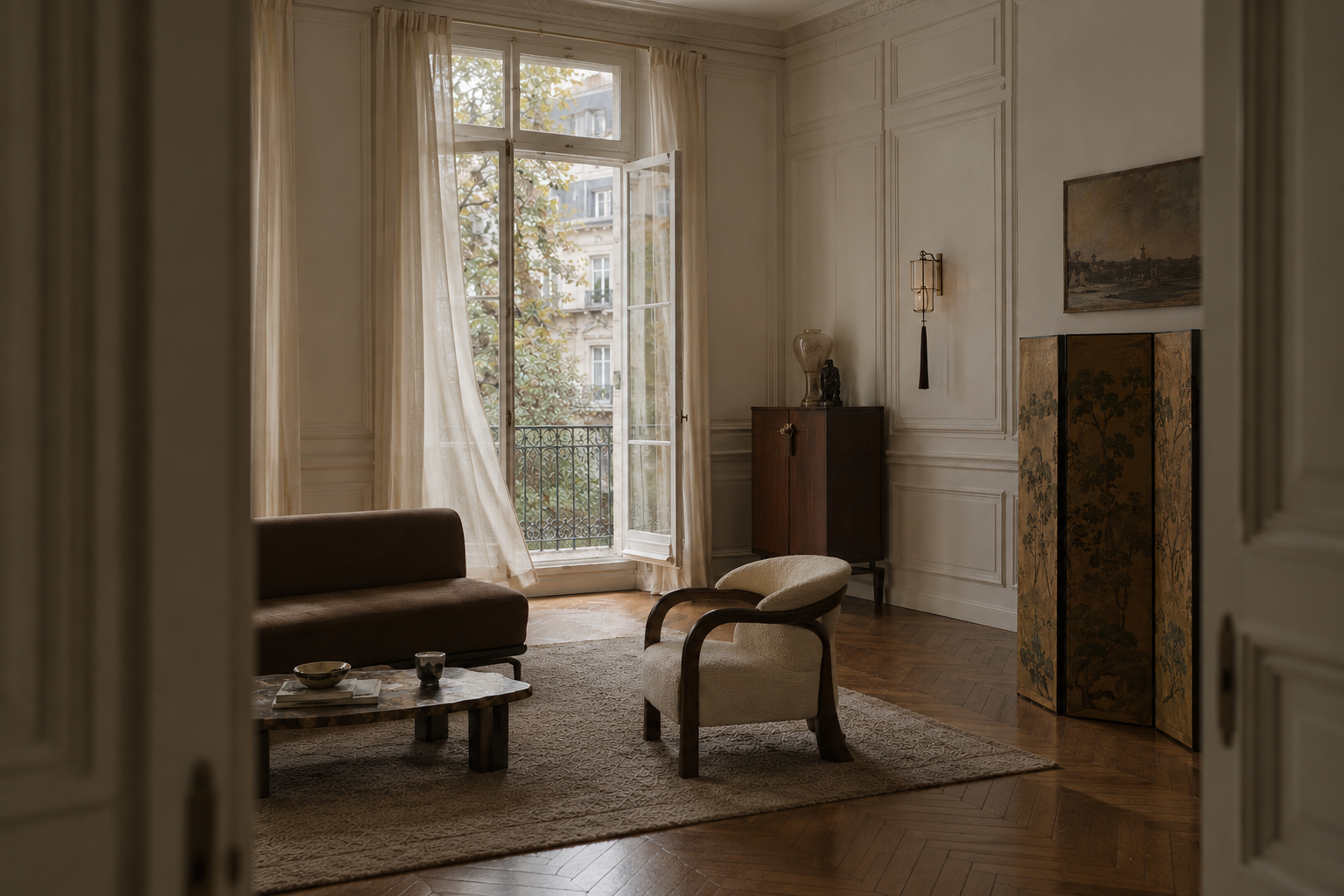
Character is something we recognise almost instinctively, yet find surprisingly difficult to articulate. Beauty is rather more obvious; character has a subtler way of making itself known.
The more I returned to my photographs, the more they seemed to ask questions I had never thought to ask. Why did the feeling of a room remain with me more vividly than its design? Why did certain places return to me almost entirely through feeling rather than appearance? And why did some spaces seem to welcome me at once, whilst others, though impeccably designed, remained strangely distant?
What became apparent was how little of a place I actually remembered through sight alone. There was always something else attached to it: a sound, a texture, even a particular quality of silence. I found it rather extraordinary that these seemingly minor details could remain so vivid when much of the visual picture had already begun to fade.
It made me reconsider atmosphere altogether.
I had thought of atmosphere as something surrounding architecture. Now I wonder whether the two can ever really be separated. Long after I have forgotten the precise details of a room, I can remember exactly how it felt to be there. Perhaps atmosphere isn't something added to a place at all, but something created by all the things we experience without consciously separating them.
Light, naturally, is part of this.
I find myself increasingly drawn to places that reveal themselves gradually rather than all at once. There is something wonderfully inviting about an old street where sunlight gives way to shadow and then appears again a little further ahead. Brightness explains everything immediately; shadow leaves something to discover. It gives the imagination somewhere to wander and allows a place to retain a little of its mystery.
The more closely I looked, the more I began to notice time, too.
Older buildings have a particular way of showing it. A worn stone staircase, a handrail polished smooth by generations of hands, a courtyard that has grown more beautiful with age. None had begun that way. They had simply acquired their beauty through years of being lived with.
I find that rather beautiful.
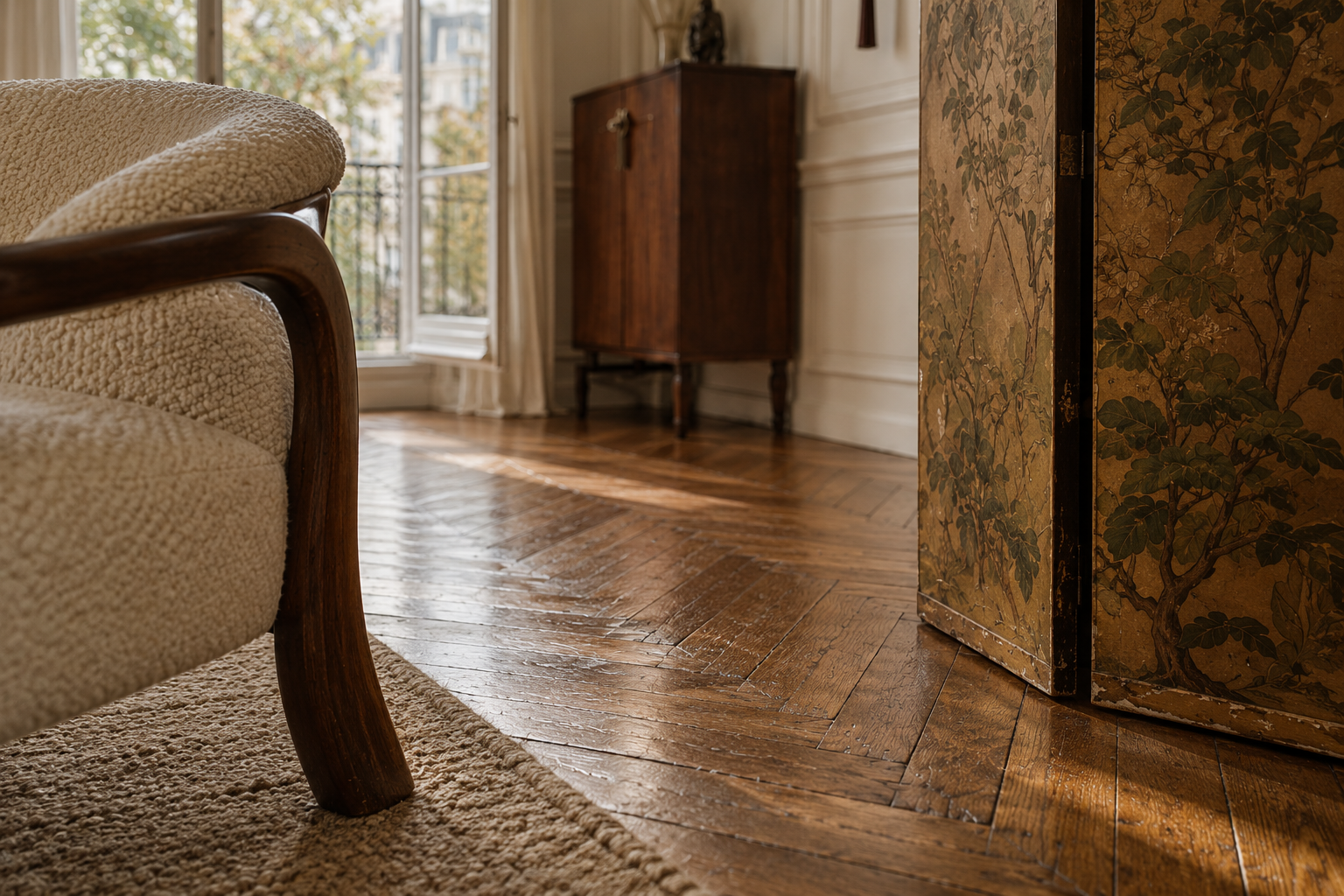
Perhaps this is why an old building can feel as though it contains more than its architecture. Every mark is evidence that somebody was there before us. Buildings don't simply survive time; they gather it.
And somewhere amongst all of this, I began thinking about dwelling. To dwell suggests something rather more intimate than simply occupying a space. It means settling into it, feeling at ease, perhaps even belonging to it for a while. And I began to wonder whether this simple desire to feel comfortable enough to stay is rather closer to what we seek from places than admiration alone.
The places that remain with me are rarely those that demand to be admired from a distance. They are the ones that made me want to come closer.
By this point, curiosity had sent me towards architects, writers and designers who had spent decades asking remarkably similar questions. I found that enormously reassuring. Not because they provided a neat answer, but because I discovered that the things I had been noticing almost instinctively belonged to a much larger conversation about how we experience place.
Since then, I have looked at places rather differently.
I notice whether a room encourages conversation or contemplation, whether light has been allowed to move rather than simply illuminate, whether silence is as much a part of the experience as sound, and whether a building wants to impress me or simply makes me want to stay.
Those distinctions interest me rather more than they once did. And perhaps that is why I continue to photograph the places I visit.
Not simply to preserve where I have been, but to understand why certain places continue to follow me home.
Perhaps I had been asking the wrong question all along. It was never simply what made these places beautiful, but what made them so extraordinarily difficult to leave behind.
