Perhaps the spaces we pass through deserve more attention than the spaces we arrive in.
Architecture is often judged by its destinations: the room, the view, the final reveal. Yet a building is experienced in sequence. A staircase changes our perspective before we reach the next floor. A corridor controls what we can see and what remains hidden.
None of these spaces are simply connecting one point to another. They create anticipation. How something is revealed can be as important as what is revealed.
What if the journey through a building is part of the architecture we have been overlooking?
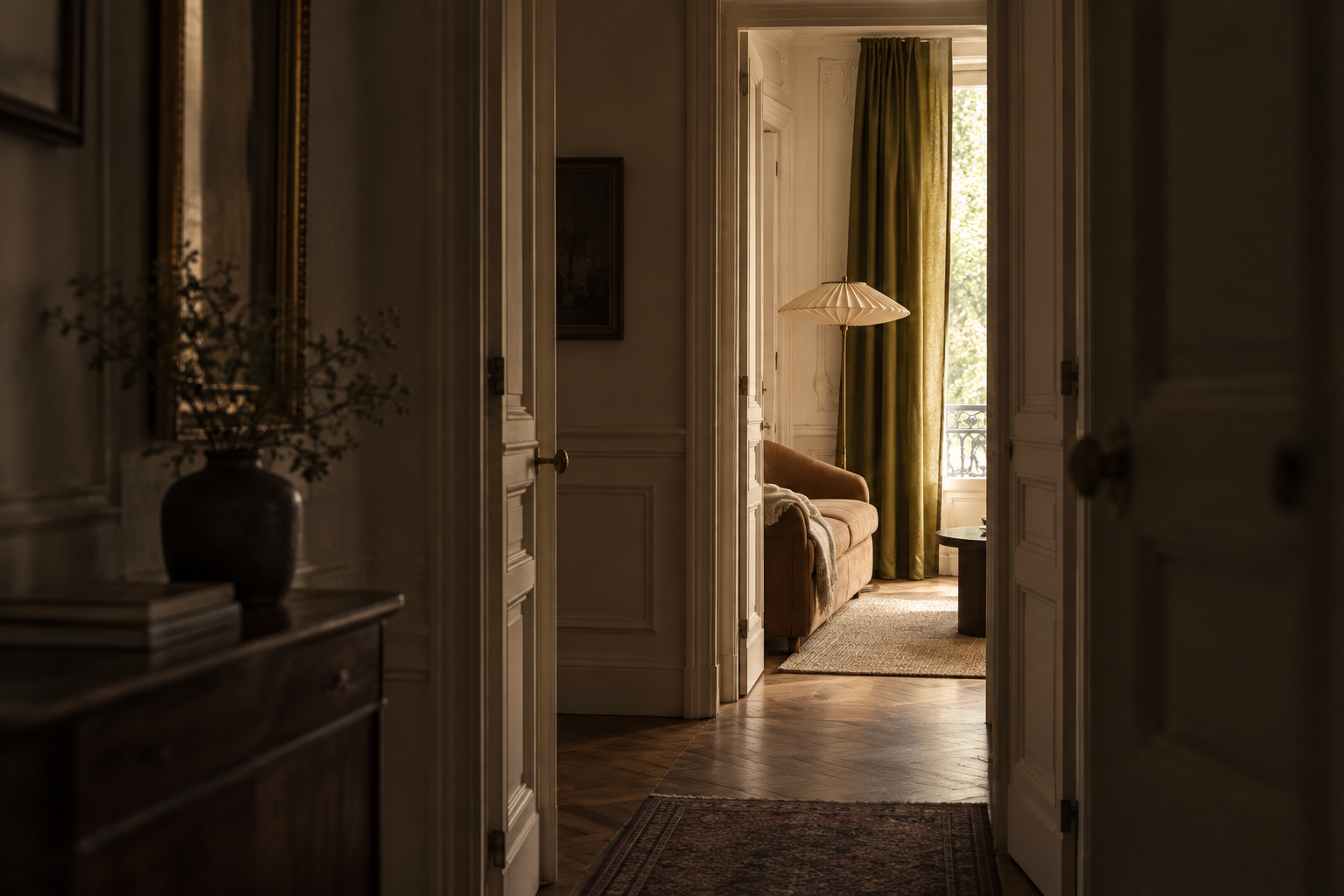
Anticipation becomes an architectural material in its own right. Yet increasingly, space is expected to justify itself through function. Every square metre must work harder. The most direct route is often assumed to be the most successful.
But efficiency and experience are not the same thing.
A staircase that takes the longer route may reveal a building differently with every turn. A landing can become a place of observation rather than simply somewhere we pass through. Perhaps in our pursuit of efficiency, we have mistaken unused space for wasted space. They give architecture rhythm. Just as music needs the space between notes, architecture needs moments between destinations. Without them, everything can be present and yet nothing truly unfolds.
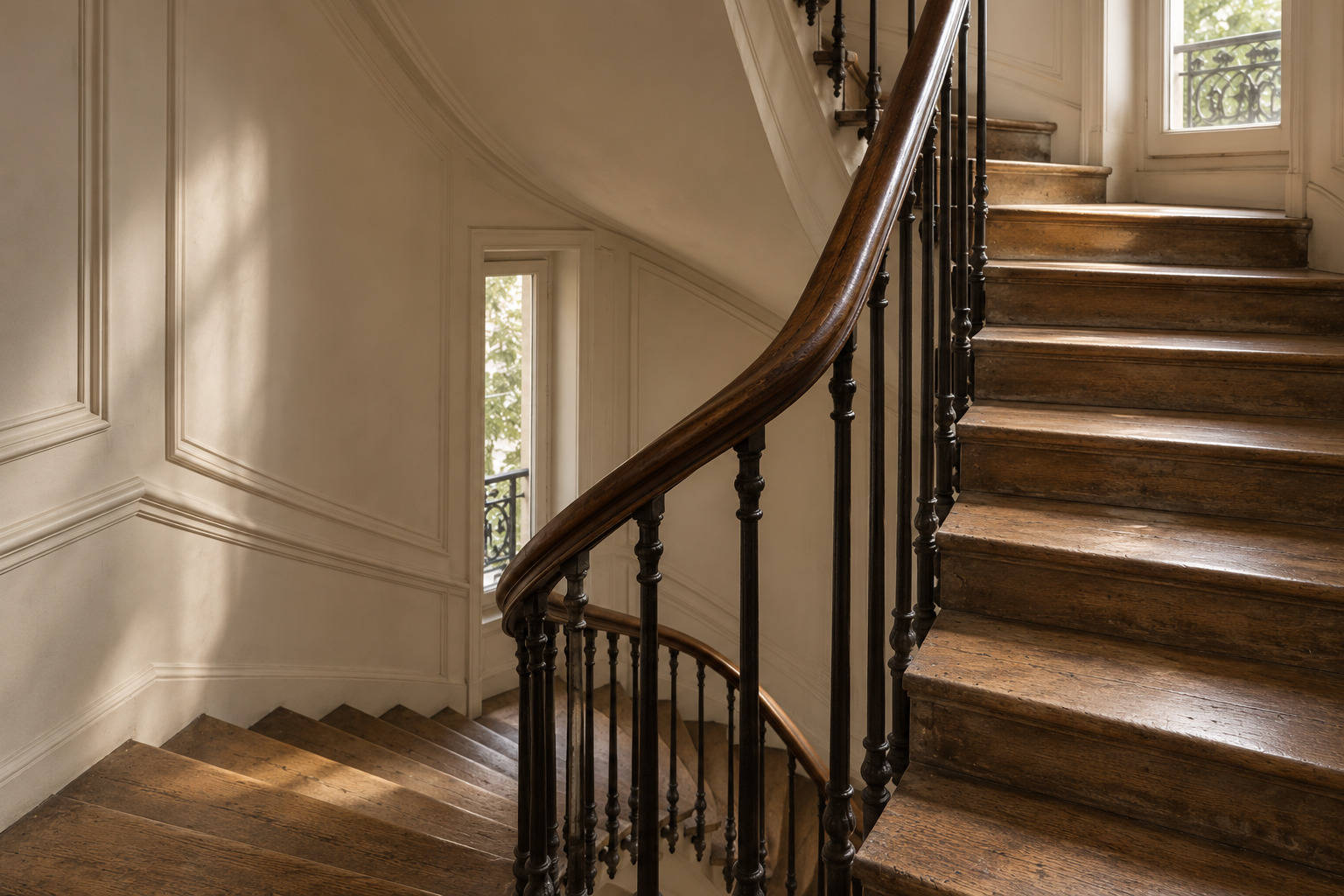
The in-between is also where architecture becomes tactile.
We turn the handle, push the door, follow the curve of a staircase. We stop at a landing, sit somewhere without purpose, or catch a view that was never intended to be the main event. These encounters may seem insignificant, but they are often where we experience a building most directly.
Perhaps the spaces between destinations are not secondary at all. They are where architecture asks us to participate.
And maybe a sense of place begins long before we arrive.
